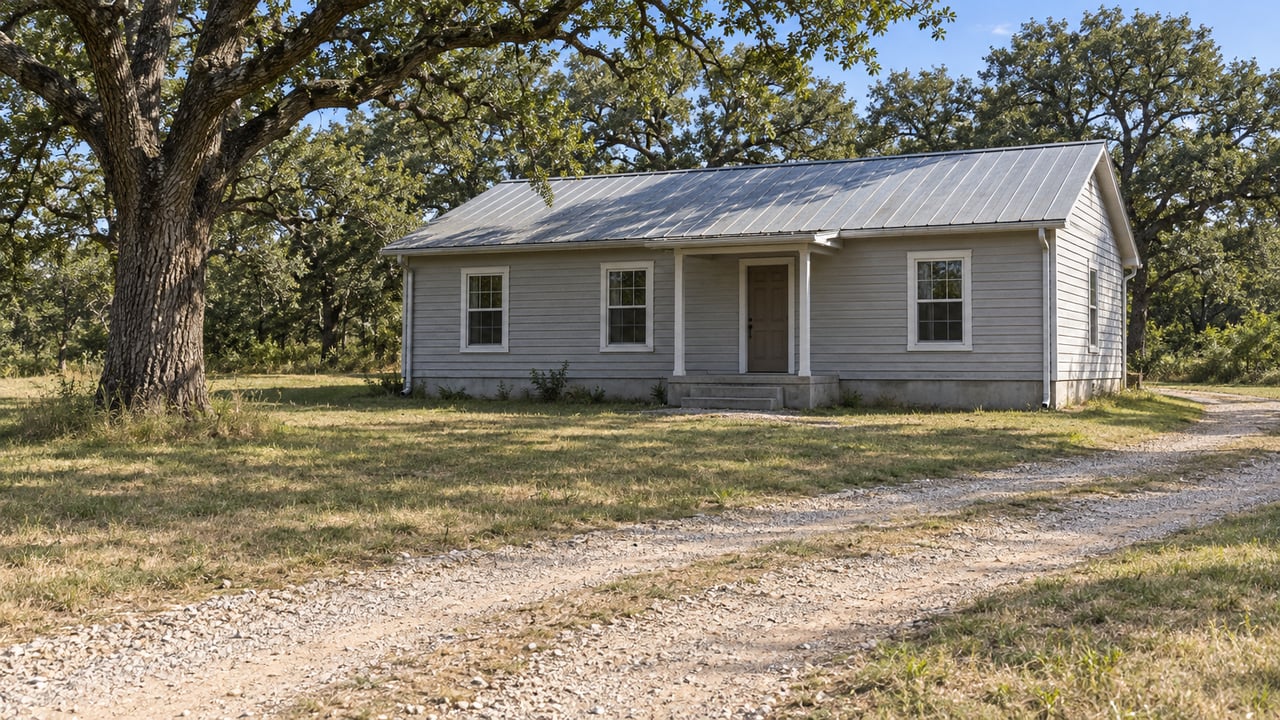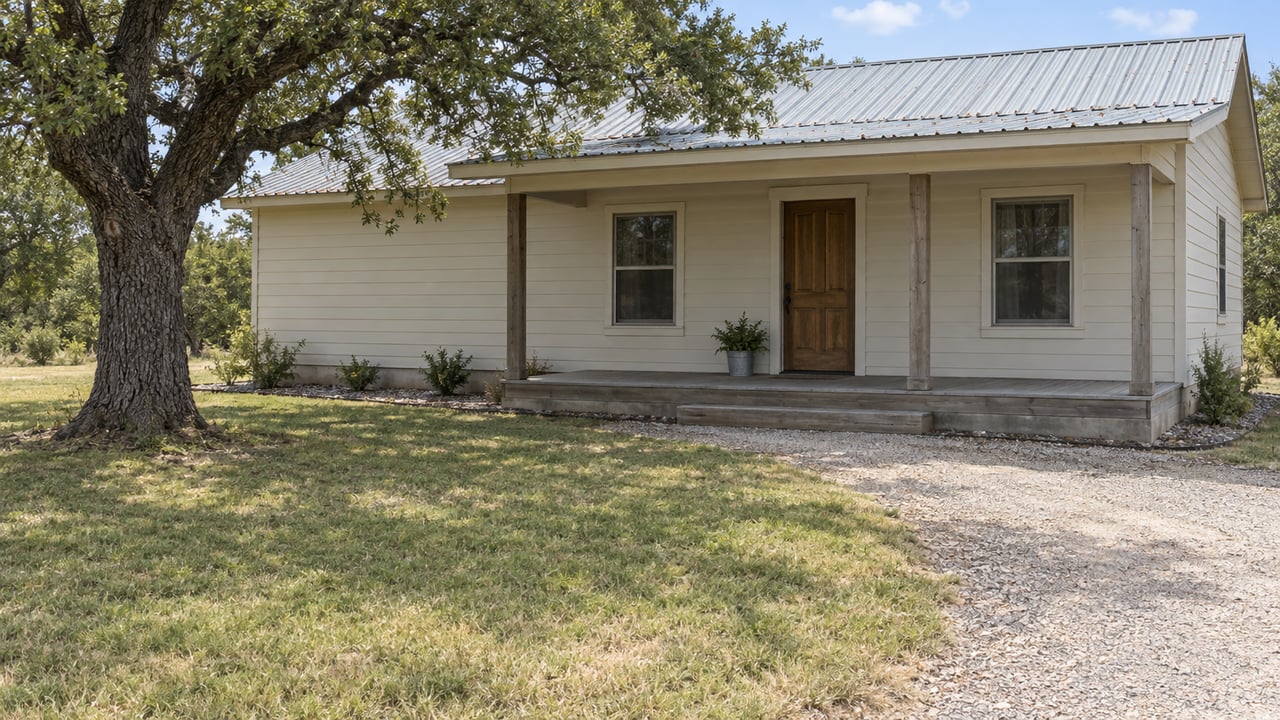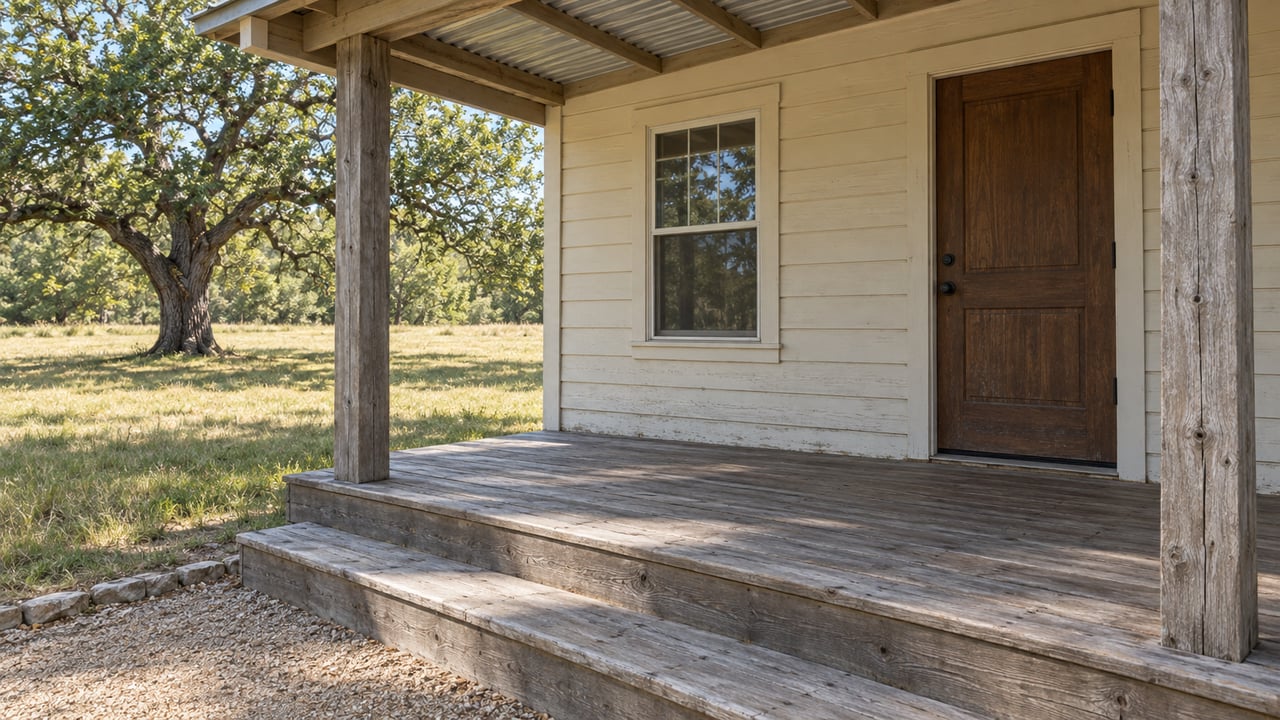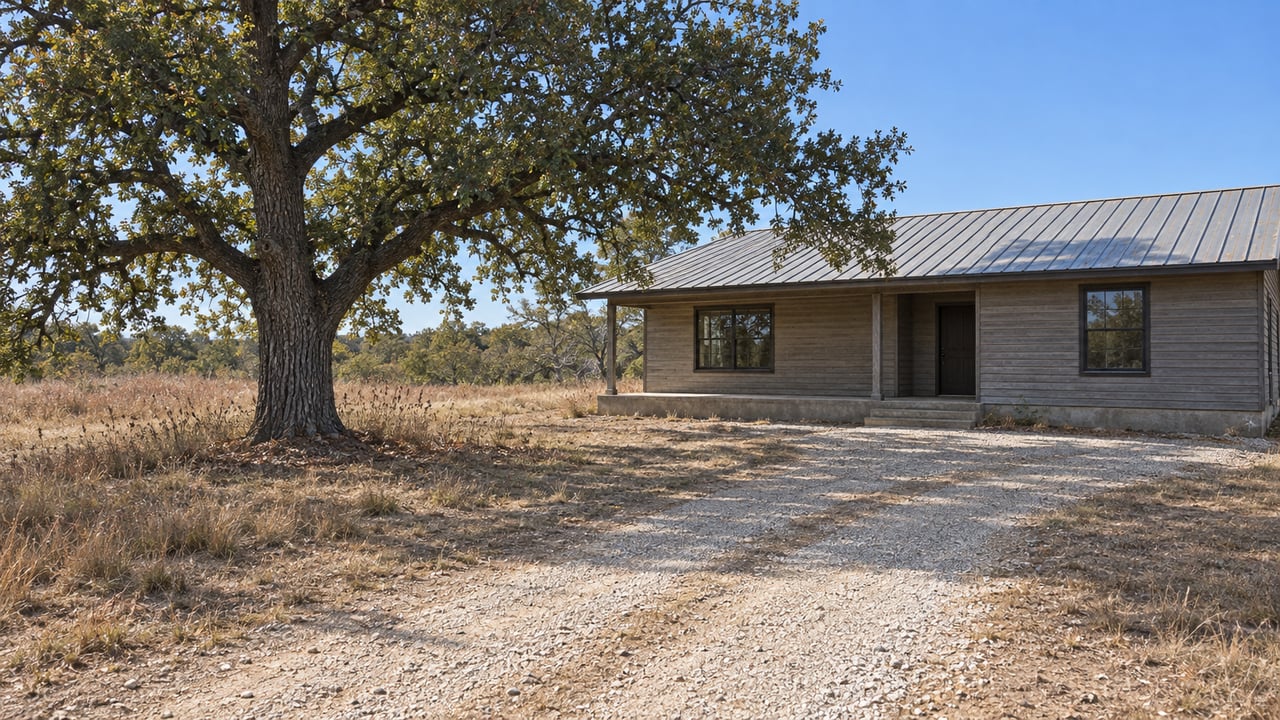
"It's incredibly meaningful to know that the land that made my hometown is now going to help bring much-needed working-class jobs." That's how Danielle Hammett described watching heavy equipment return to the property. The quote was reported by KDH News. She posted it on Facebook when the redevelopment plans went public. It's a fitting way to start, because Rockdale right now is doing something the rest of Texas is not.
Statewide, home prices have been falling for eleven straight months as of April 2026, according to the Texas Real Estate Research Center at Texas A&M. Inventory sits well above pre-pandemic norms. Homes are sitting longer. Pricing expectations have shifted since 2022. That's the headline every buyer touring Central Texas this summer has already read.
Rockdale hasn't gotten the memo. The town's average home price climbed from $319,594 in February 2026 to $334,249 in May 2026, based on regional multiple listing data. That's the opposite direction of the statewide trend reported through April 2026. If you're comparing Rockdale to a portal median or a state forecast, you're comparing it to the wrong benchmark. The number that actually explains what's happening sits just outside downtown, on a stretch of land most drive-by buyers have never heard of.
The site that's rewriting the town's math
For most of the last century, Rockdale's economy ran on one employer. Alcoa built an aluminum smelter here in the early 1950s to take advantage of the lignite coal reserves at Sandow, and for decades the plant employed a meaningful share of the town. When Alcoa shuttered the smelter in 2008, and Luminant closed the coal-fired Sandow Power Plant nine years later, the town lost the anchor that had defined it. The property sat mostly dormant, marketed on and off as ranchland, until Dallas-based Xebec Holdings bought all 31,000-plus acres for $240 million in November 2021.
Xebec's plan is to turn the old industrial footprint into what JLL, the brokerage marketing the site, calls the only megasite in Texas. Phase one, the Advanced Manufacturing Logistix Campus, covers 3,300 acres and is slated for up to 35 million square feet of industrial space, with first occupancy targeted for the third quarter of 2026. The property already carries 1.5 gigawatts of power capacity, and JLL projects that figure will grow to nearly 4 gigawatts by 2028. Part of that growth is tied to a 1,200-megawatt natural gas plant announced for the site in 2024.
The first confirmed tenant is T1 Energy, which executed a lease and purchase option on 100 acres for its G2 Austin solar cell manufacturing facility. The announced numbers are specific: roughly $850 million in capital investment and up to 1,800 direct manufacturing jobs, with production targeted for the second half of 2026. The Milam County Commissioners Court, which Judge Bill Whitmire presides over, approved T1's tax abatement package in April 2025, which is the kind of local government action that tells you the deal is real, not speculative.
Then, this spring, the town added a second front. The Rockdale Municipal Development District struck a partnership with the commercial real estate firm Partners to develop a 100-acre industrial park on FM 908 N, just north of downtown. The district acquired the site in fall 2025, annexed it into the city, and secured industrial zoning before announcing the master-developer partnership in May 2026. That project is explicitly positioned to catch spillover demand from Samsung's semiconductor campus in nearby Taylor and from T1 Energy, rather than to compete with the megasite.
None of this is happening in a vacuum. Rockdale's population has grown 8.91 percent since the 2020 census, reaching an estimated 5,768 residents in 2026. That's a small number in absolute terms, but it's real growth in a Milam County town that spent most of the last decade flat.
The houses are already showing up
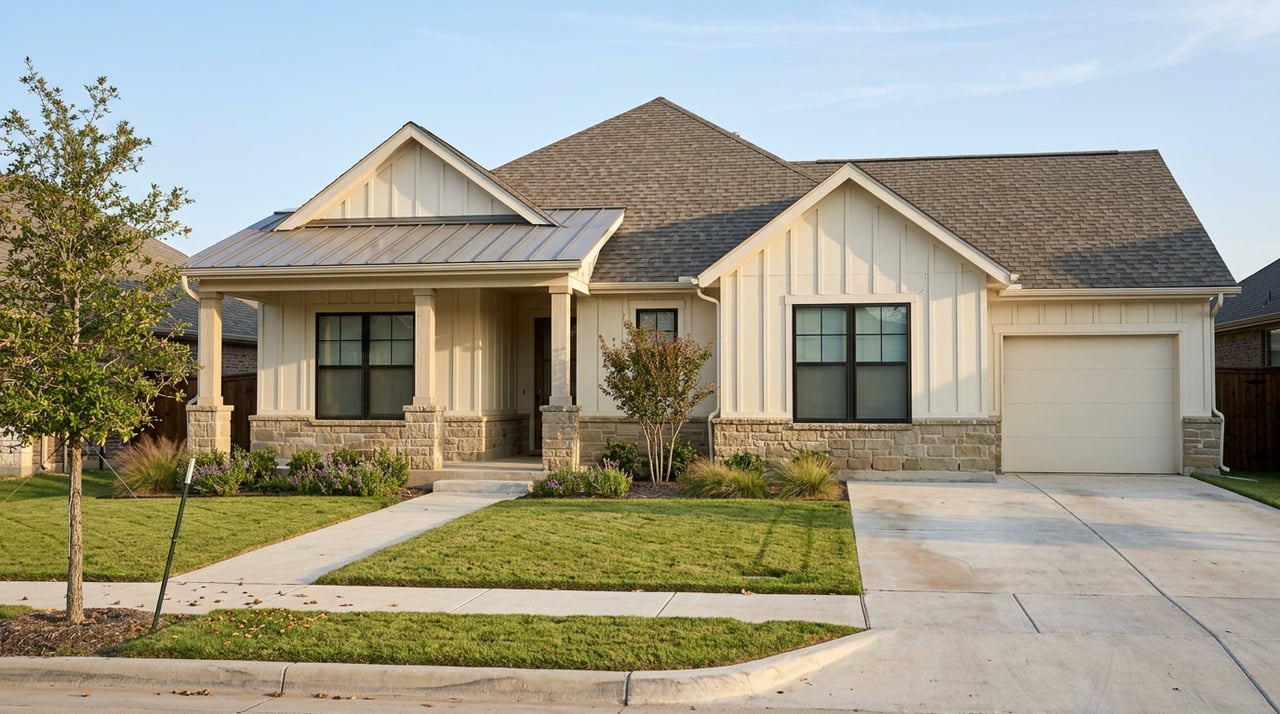
The clearest residential evidence is Cornerstone, a 148-home community that D.R. Horton is building off FM 487, a few minutes from Rockdale City Hall. It's the town's first new subdivision in decades. Michelle Toungate, the Rockdale Municipal Development District's executive assistant, has described plans for at least four phases, eventually including an elementary school. Homes there have closed in the roughly $192,000 to $313,000 range, which tells you the early buyers are workforce and commuter households, not speculative investors chasing appreciation.
That's worth sitting with for a second. Cornerstone is a multi-phase community in a town of under six thousand people. Its progress is worth tracking alongside the megasite's timeline.
What this means if you're looking at acreage, not a subdivision lot
Here's where it gets more interesting for anyone shopping raw land rather than a finished house. Milam County land data depends heavily on which number you're reading. Asking-price data show a median asking price of roughly $17,800 and an average asking price of roughly $19,200 per acre. But actual closed sales, tracked separately, show a median closer to $13,500 per acre. That's not a rounding difference. The asking figures are roughly 32 to 42 percent above the $13,500 median sold price per acre.
Data type | Metric | Per-acre figure |
|---|---|---|
Active listings | Median asking price | roughly $17,800 |
Active listings | Average asking price | roughly $19,200 |
Closed sales | Median sold price | roughly $13,500 |
That gap is the real story for acreage buyers right now. When a growth story like Sandow Lakes gets attention, asking prices on nearby land may run ahead of recent closed-sale figures. If you're evaluating a tract near Rockdale, compare asking prices per acre with recent sold prices and consider how expectations about the megasite's timeline may factor into the difference.
That doesn't mean the optimism is wrong. It means the smart move is to separate the story from the price and negotiate accordingly, especially on tracts that don't have direct frontage on FM 908 N, FM 487, or the other roads that actually connect to the industrial activity. Land two or three miles off those corridors isn't pricing off the same fundamentals, even if the listing description mentions the megasite in the first line.
Milestones worth tracking before you make an offer
A few dates on the calendar will tell you more than any market report between now and the end of 2026:
- Third quarter 2026 occupancy at the Advanced Manufacturing Logistix Campus. If tenants actually move in on schedule, that's the point where job numbers stop being projections.
- T1 Energy's production start, also targeted for the second half of 2026. A working solar facility with 1,800 jobs changes local housing demand in a way a signed lease does not.
- Additional phases of Cornerstone. Toungate has referenced plans for apartments and a school down the road. Watch whether those phases break ground on schedule as a measure of whether the plans are advancing.
- Progress on the FM 908 N industrial park. It's still early, just months past the master-developer announcement, but it's the second data point confirming the town's development pipeline isn't a single-project bet.
If those milestones land roughly on schedule, the price divergence between Rockdale and the rest of Texas is likely to keep widening rather than closing. If they slip, the gap between asking price and sold price on nearby acreage may widen too.
Rockdale's story right now isn't a typical rural market story. It's a company town watching a new company arrive, at a scale the town hasn't seen since Alcoa first showed up in the 1950s. Prices reflect that, even when the state's numbers say they shouldn't. If you're weighing a lifestyle purchase, a workforce-adjacent lot, or a larger acreage play near the megasite corridor, the numbers above are the ones worth checking before you check the state forecast.
If you want to walk a specific tract and talk through what its price is actually pricing in, Ranch House Real Estate knows this ground. Let's grab a coffee and tour some land.